There are 3 ways to make more money in client-facing businesses:
- Get more clients
- Get clients to pay you more
- Get clients to stay longer
Today, I’m outlining a simple system that does all 3 at once.
All while keeping delivery incredibly efficient…
And letting you focus on serving your current clients…
…instead of spending all your time acquiring new ones.
It’s what I call an Offer Ladder.
But before I dive into how they work…
I want you to imagine two shopping malls.
The Mall Analogy
Mall A has the traditional setup:
Separate stores with different names under one roof.
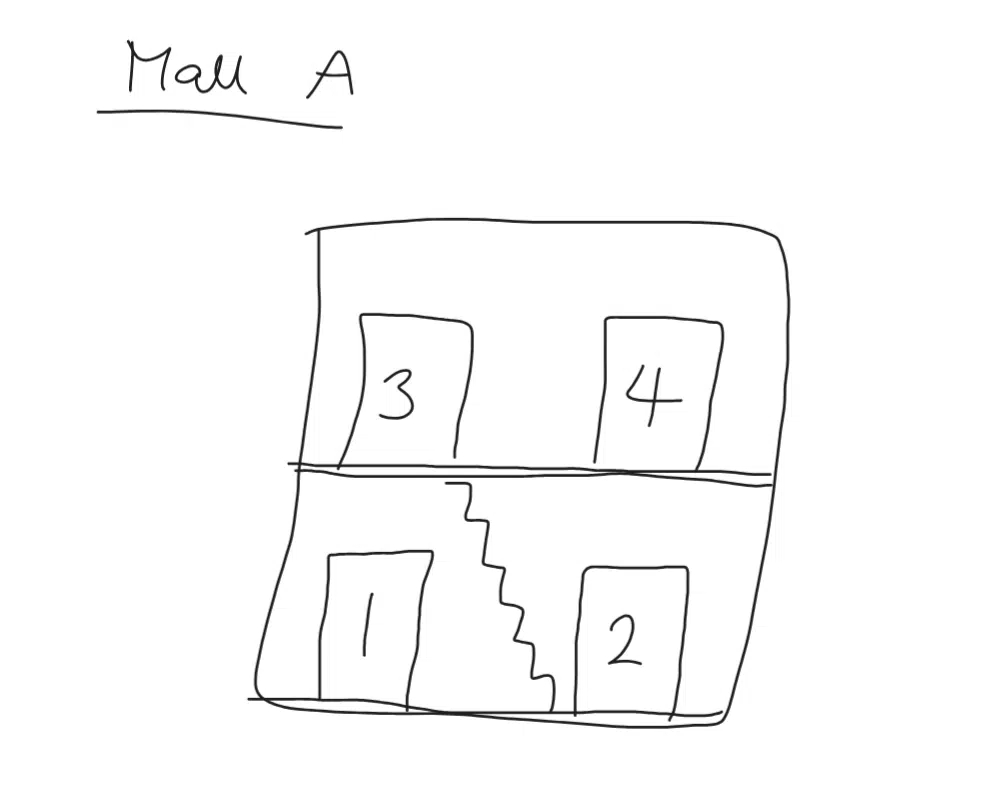
There’s a course store.
A coaching programme store.
A mastermind store.
A store for templates and e-books.
And so on.
It’s simple and easy to set up and run.
But there are problems…
Every store is basically in competition with the rest.
Each one has to promote itself…have its own checkout…
And ultimately convince potential customers to go in and buy something.
If they succeed…
The customer gets what they want and leaves.
Then, at that point…
The other stores have to convince them to go and buy something from theirs next.
Multiple storefronts also mean multiple entry points.
This adds complexity and friction.
People entering the mall don’t necessarily know which to choose.
It also means multiple exits.
Multiple doors lead away from what’s on sale and out of the mall.
Money that customers might otherwise have spent stays in their pockets.
Now picture Mall B.
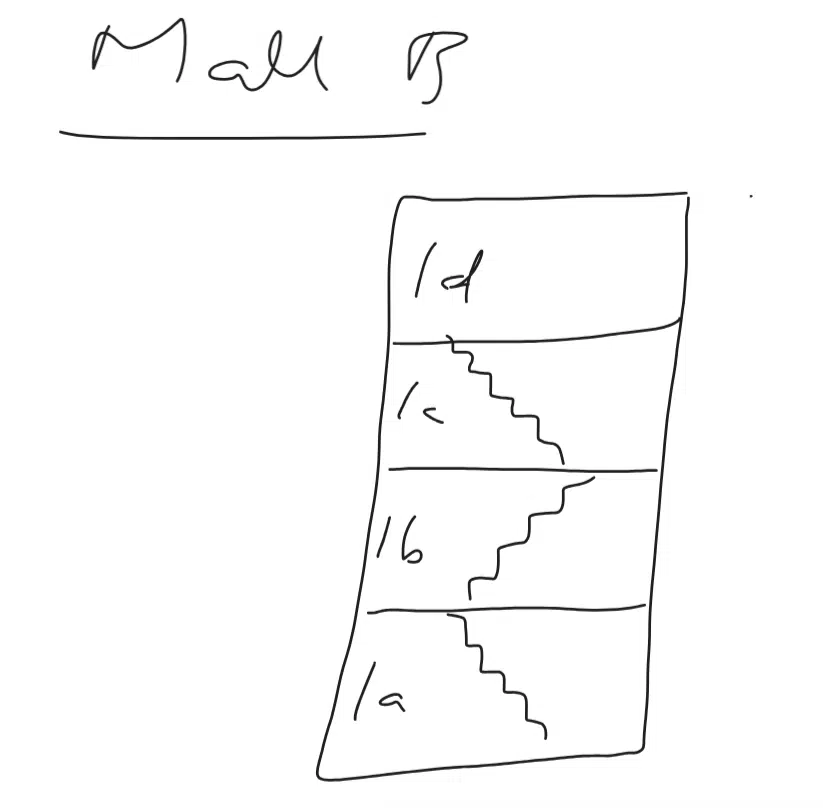
This one’s different.
It’s one store.
One brand.
One checkout system.
And it only sells one thing:
A specific outcome to a pressing problem they know exists.
Mall B has several floors inside, though.
All connected by elevators.
Sure, every now and again…
Someone might clamber in through a window to an upper floor.
But basically everyone enters on the ground floor.
AKA, the most accessible one.
Once inside…
They can head up to the second floor if they want more support.
On the third floor, they’d find even more.
And, on the top floor…
They’d get the most support the mall offers.
Now…
Each floor up is more expensive than the last.
But the extra support means they also deliver faster results.
Again, they all deliver the same outcome.
They just sell different amounts (and types) of support.
So…
One door lets people in.
Elevators take them to the floor they want.
Result?
This mall makes it easy for people to buy the outcome.
But it also lets anyone with more money get it faster.
And because the elevator goes up AND down between floors…
People can simply drop down to a lower floor to get less support instead of leaving altogether.
Offer Medleys vs Offer Ladders
Mall A is what most people in the coaching/consulting/info business space end up with.
I call it an “Offer Medley”.
This is where you click someone’s LinkTree in their link in bio and see 5+ things for sale.
Often totally unrelated.
Or loosely working toward a similar goal.
But either way, people sell lots of different stuff.
Each with a fixed price and duration.
Technically…
It’s more like a collection of different products.
This is an aside, but it speaks to a useful distinction…
Offers vs Products
A product and offer aren’t the same.
A product is what people get if they buy.
An offer is how you present it to the market.
In other words, a product is the gift.
Whereas an offer is the gift wrapping.
Many people don’t really sell offers.
They just have products:
- Coaching
- Mentorship
- In-person events
- Masterminds
- Courses
- Consulting hours
- E-Books
- …etc
Recognizing this distinction is useful for several reasons.
For example…
It means you can change your offers without changing anything inside them.
However, I’ll talk more about this stuff in due course.
For now…
Back to Offer Medleys and their pitfalls.
Offer Medleys
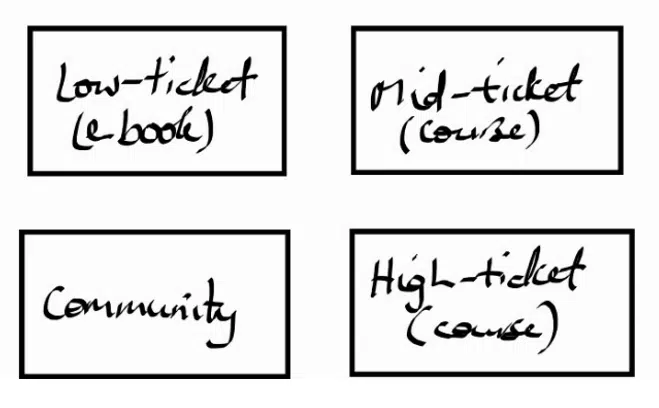
Having an Offer Medley creates complexity.
It also leaves money on the table.
For example…
Someone who buys your course might want ongoing mentorship afterwards.
But you might not have anything like it for them to buy.
You might not even know they want it.
Everything in an Offer Medley requires re-selling, too.
They buy the first thing.
Then you have to sell them again on the next.
Then there’s the energy component…
Multiple offers divide your limited supply of it.
You’re not focusing on ONE thing.
For example, if you want to improve your Offer Medley…
You have no choice but to improve every component of it individually.
There are more issues I could mention…
But you get the picture.
Offer Medleys are unideal.
Especially when you’re trying to maximize efficiency.
The better option, in my opinion, is an Offer Ladder.
Offer Ladders
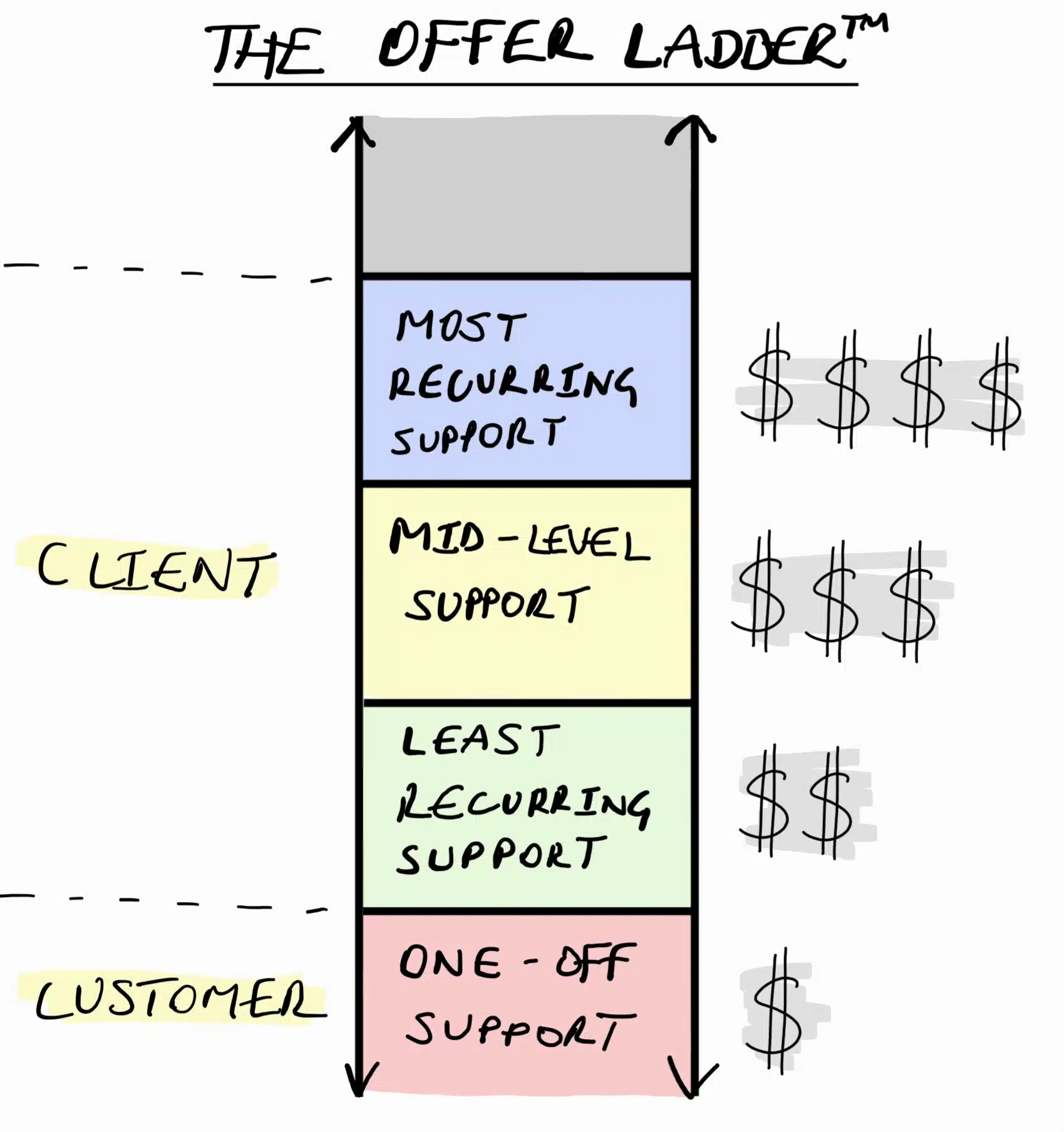
This is Mall B.
You have one core offer.
(Something I call your Freedom Offer…)
But then you sell different, dynamic levels of support to it.
Think of an aeroplane.
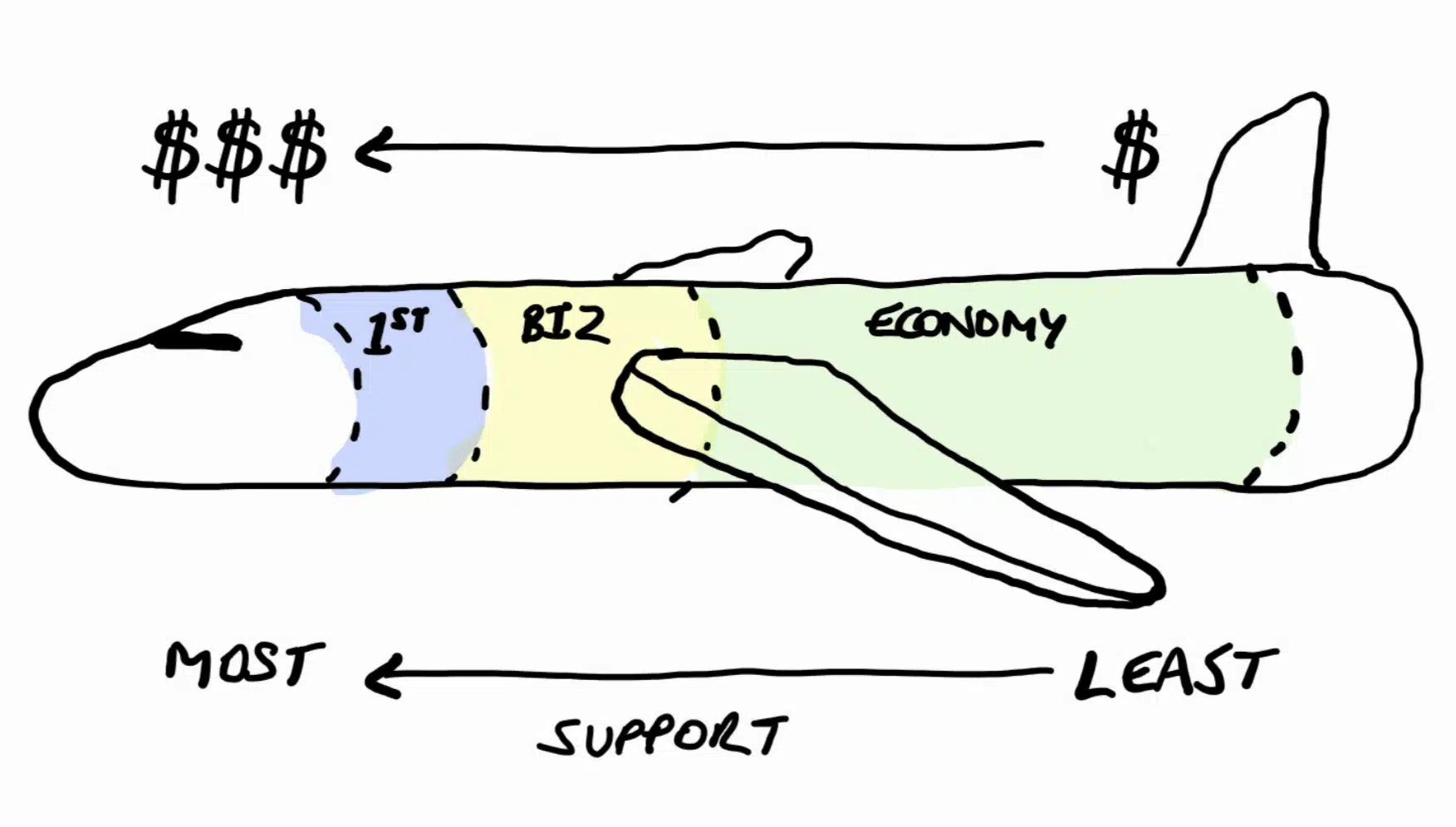
Everyone on board goes to the same place.
But most people fly Economy, because it’s the cheapest.
A much smaller number fly in Business.
And the lucky few fly in First Class.
In theory, everyone at the back could have paid to be at the front.
But they don’t – or can’t – because of the difference in price.
This way, the airline gets to serve more people…
And make more money…
All with one vehicle.
It’s the same with an Offer Ladder.
At lower levels, or “Rungs”, people pay less but get less hands-on support.
This is the ground floor of the mall.
Higher Rungs are the opposite.
They’re higher touch and higher priced.
Together, this is how you:
- Get more clients
- Get clients to pay more
- Get clients to stay longer
This maximizes acquisition.
But it also maximizes revenue.
Because…
Selling people into lower rungs gets an easier “yes” because the cost of entry’s low.
(People CAN join higher rungs off the bat – just like people could climb in through upstairs windows at the mall – but they’ll be the exception.)
Higher rungs tap into the corners of the market willing to pay more for faster results.
And churn drops, too.
Because people can drop to lower rungs instead of just leaving.
But for me, the coolest part is this:
You can serve more people…
While limiting how much time and effort you spend at work.
Most clients will stay at the cheaper Rungs.
Where your delivery burden’s lowest.
The effort you devote to clients in higher Rungs goes up significantly.
But there will always be fewer of them because it’s more expensive.
So everything evens out.
For more insights on creating lots of leverage in your business, check out this post.
Another benefit worth mentioning:
A common struggle and tension in this space is spending so much time trying to get clients that you have none left to serve current ones.
Quality drops as a result, and so clients churn.
This can create a vicious spiral.
Because now there’s even more pressure to land new ones.
An Offer Ladder corrects this.
Rates of churn should fall for the reason I mentioned earlier.
But also because your income no longer relies on making money from NEW clients.
You can simply upsell current ones into higher Rungs instead.
These people should be much easier to sell to (they already know and trust you), yet many creators and coaches never give them an opportunity.
They never ask if their clients want more.
Doing so can take the pressure off.
Suddenly, an upward spiral develops…
You make more money from clients you already serve.
Which means you need fewer coming through the door to hit your financial goals.
Which means you have more time to help those you already have.
Which keeps service quality high.
Which helps reduce churn and maximize LTV.
And just to add to that, this feeds into the whole…
“You don’t need a big audience to make great money online” thing.
Low churn and high LTV are core components of having an efficient audience.
The more efficient your audience – the more money you make per average audience member – the smaller it needs to be to hit your revenue goals.
This takes the pressure off your marketing.
You can stop striving to build a big audience because you don’t need on.
And that’s important…
Because when you think you need a giant audience, it’s easy to get distracted.
You start focusing on things like followers and engagement vs more meaningful metrics, such as leads, sales, and offers made.
Summing Up
Anyway…
I’ll leave it there for now.
I hope this has been a useful introduction to Offer Ladders and the benefits they bring.
If you want to see how it could work in your business, feel free to reach out at any point, and I’ll try my best to help.
In the meantime, check out the 10-Minute Offer Unlock.
It’s a simple tool I put together that gives you a visual depiction of the strength of your offer.
It should help you spot any hidden gaps or opportunities that could help you sell more stuff, basically!
For an Offer Ladder to be effective…
You need to know people want the offer itself.
So this is a good place to start.
Finally, if you want to learn more about how Offer Ladders fit into the overall system I’m using to rebuild my business to £10k/m working just 3 days a week…
Check out this post next.
Thanks for reading this one. I hope it’s been useful!